Featured post
🎓 Why Are Soft Skills Now the Hardest to Master? Navigating the Modern Student's Career Crisis

Dec 6, 2025 · 2 min read
The current generation of students faces a paradox: while they are the most digitally literate generation in history, they report intense career anxiety and grapple with a job market that seems to value intangible "soft skills" more than ever before. This article explores the central challenge for today's students—how to bridge the gap between academic achievement and professional readiness—and provides a clear roadmap for success.
The Student Paradox: Prepared Academically, Stressed Professionally
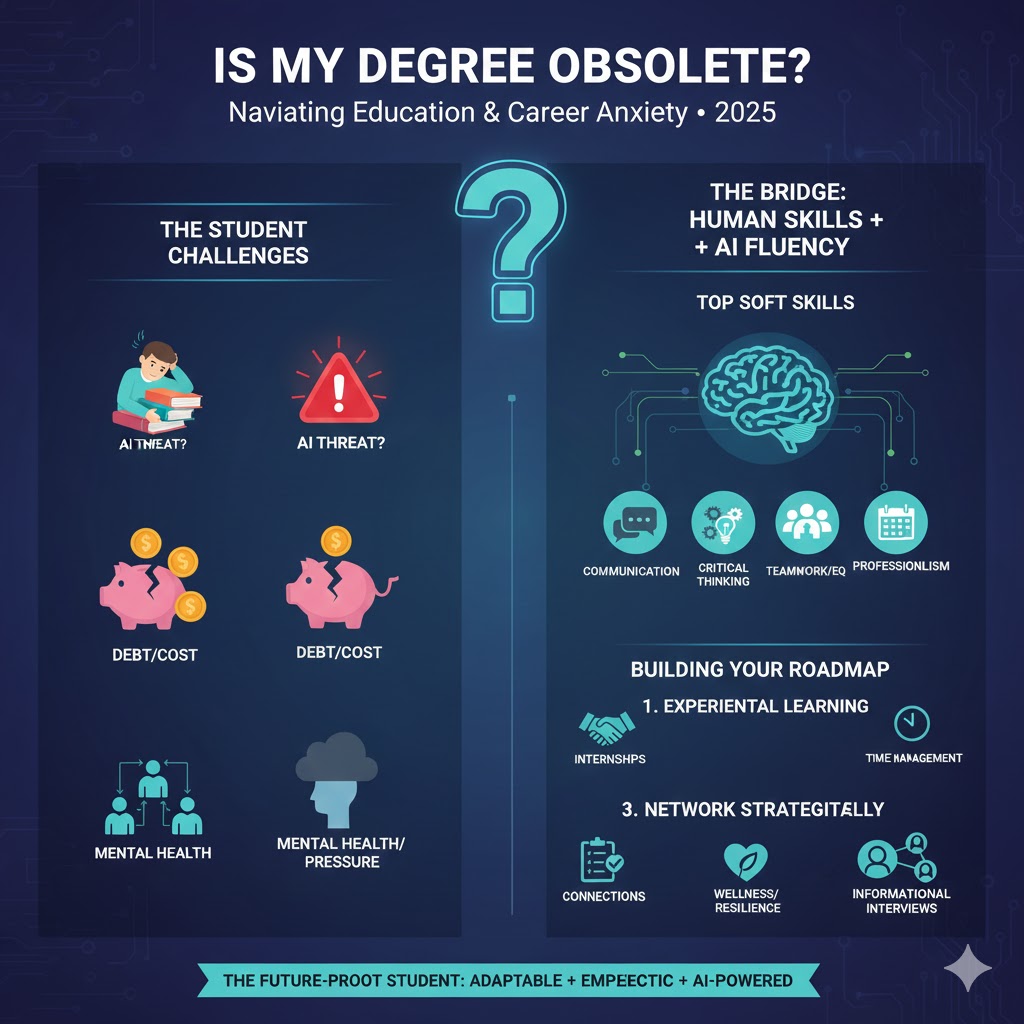
Students today are dealing with numerous pressures, according to recent studies: financial stress (often tied to soaring education costs and debt), mental health challenges (fueled by intense competition and social isolation), and a rapidly changing labor market where technical skills can become outdated quickly.
The core question looming over degree programs is: How can I ensure my qualifications translate into a meaningful, sustainable career when the rules keep changing?
The answer lies in recognizing that the definition of prepared has fundamentally shifted. Technical competence (your major) is merely the entry ticket; professional success is increasingly determined by competencies that machines cannot replicate, often categorized as "soft skills.
"Soft Skill Priority,Why It Matters to Employers
Communication,"Essential for client interaction, presenting data, and avoiding costly misunderstandings."
Critical Thinking,"Required for analyzing a situation, not just executing an AI's output."
Teamwork/EQ,"Crucial for building trust, leadership, and maintaining a harmonious, productive workplace."
Professionalism,"Includes time management, work ethic, and accountability—the backbone of reliability." The Roadmap: Integrating Career Development into Education
Students can't afford to treat career preparation as an optional extra; it must be interwoven with their academic journey.
1. Prioritize Experiential Learning
The greatest engine for soft skill development is doing. Academic work proves you can learn, but real-world experience proves you can apply that knowledge in a professional environment.
Internships and Co-ops: These offer structured opportunities to practice communication and teamwork under pressure. Focus on getting diverse experiences, even in roles slightly outside your core major.
Group Projects and Leadership Roles: Take the lead on projects in class and join student organizations. These opportunities are laboratories for conflict resolution and delegation.
Service Learning: Volunteering or community engagement develops empathy and social awareness, highly valued components of emotional intelligence.
2. Master Time Management and Wellness
The pressure of balancing a demanding academic schedule with career preparation, part-time jobs, and a social life is a significant challenge. Time management is, in itself, a crucial professional soft skill.
The Integrated Schedule: Create one master schedule (digital or physical) that includes all classes, deadlines, work shifts, and dedicated time blocks for self-care and sleep.
Learn to Say No: Protect your time. Recognize that taking on too many responsibilities leads to burnout and diminishes the quality of all your work.
Use Campus Resources: Actively utilize career counseling, tutoring, and mental health services. Seeking help is a sign of self-awareness and proactivity, not weakness.
3. Network Strategically
The vast majority of job opportunities are found through connections. Networking is not about asking for a job; it's about building genuine professional relationships and gathering information.
Informational Interviews: Reach out to alumni or professionals in your desired field to learn about their career path. This improves your verbal communication and helps clarify your goals.
Develop Small Talk: Practice the ability to connect with people about topics outside of work (hobbies, sports, current events). This foundational interpersonal skill builds rapport and trust, which are priceless in any professional setting.
Your degree is not obsolete, but it is incomplete without the intentional development of these critical human skills. The student who succeeds today is the one who treats their entire college experience—from the classroom to the internship to the club meeting—as a comprehensive training program for a versatile career.
Comments
0No comments yet. Be the first!