Featured post
🤖 The Next Wave: AI, Strategic Finance, and the Efficiency Ratio

Dec 6, 2025 · 2 min read
The initial article you referenced on "AI, Interest Rates, and the Shift to Strategic Finance" is directly supported by recent research and industry outlooks that highlight AI's accelerating role in transforming the financial sector from a cost center to a strategic engine. This shift is fundamentally changing corporate finance, risk management, and even how market dynamics are understood.
AI as the Strategic Growth Engine
The adoption of AI, particularly Generative AI (GenAI), is moving beyond simple pilot projects and into enterprise-wide transformation, driving a profound shift in the role of the finance department:
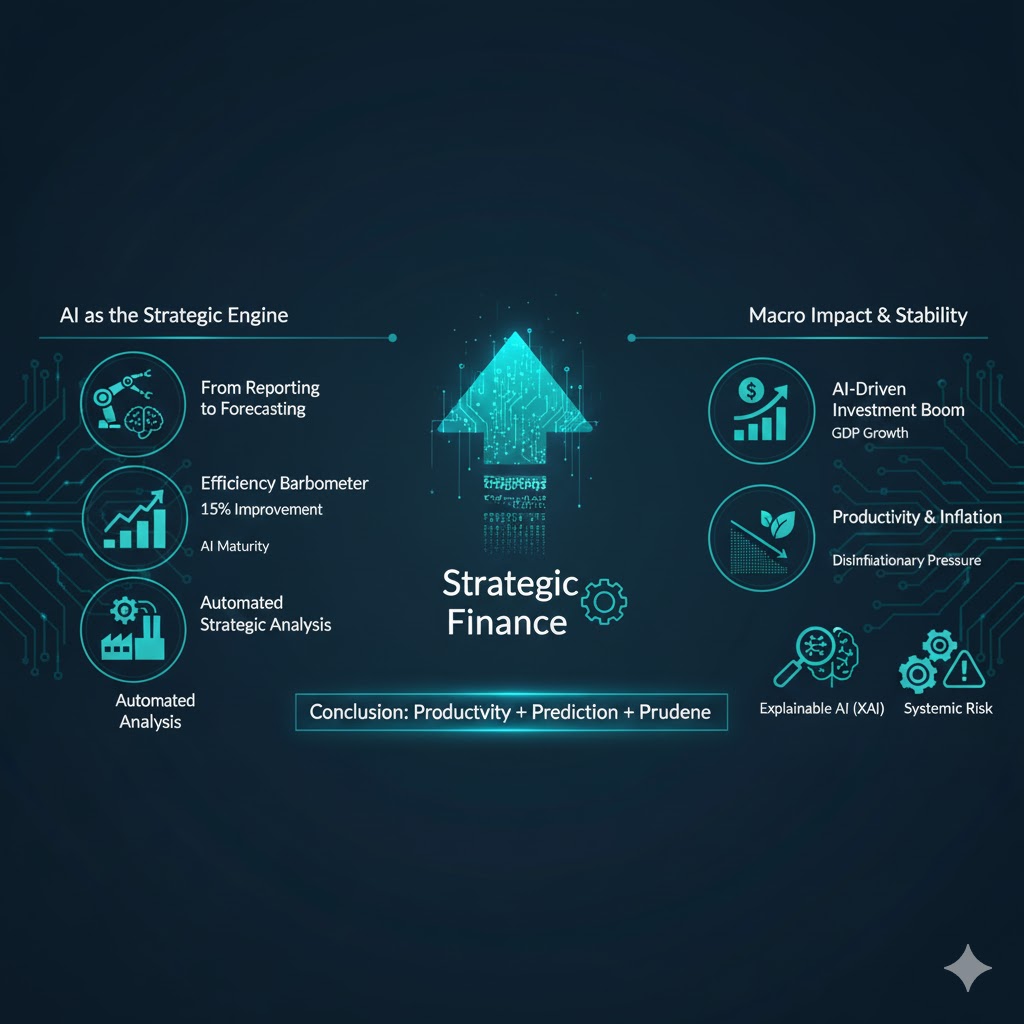
From Reporting to Forecasting: AI is enabling the finance function to transition from backward-looking historical reporting to real-time, predictive intelligence. Models now analyze vast amounts of data—including market trends, supply chain metrics, and even social sentiment—to provide dynamic, actionable forecasts. This allows finance teams to proactively simulate scenarios, manage risks, and advise on strategic direction.
The Efficiency Barometer: PwC and other analyses suggest that banks fully embracing AI could see up to a 15-percentage-point improvement in their efficiency ratio. The efficiency ratio is no longer just a metric of cost control; it is becoming a forward-looking indicator of AI maturity, revealing which institutions are winning the race to operationalize AI at scale.
Automated Strategic Analysis: AI agents are taking over routine tasks like invoice processing, reconciliation, and basic data input. This frees up finance professionals to focus on higher-value activities: strategic analysis, corporate development, and collaborating with business partners to achieve enterprise-wide outcomes.
The Macro Impact: Interest Rates and the Economy
While the effect of AI on central bank interest rate policy is complex and still emerging, a key macroeconomic impact is already visible:
AI-Driven Investment Boom: The race for AI dominance has spurred massive investment in data centers, compute capacity, and related infrastructure. In the US, this investment boom has become a significant driver of GDP growth, potentially masking broader economic softness and influencing projections for inflation and overall growth. This AI-related investment is creating a powerful tailwind.
Productivity and Inflation: The fundamental long-term impact of AI on the economy hinges on its ability to deliver sustained productivity growth. If AI significantly lowers the cost of production and services across industries (the 'efficiency channel'), it could exert a disinflationary pressure over time, a factor central banks will eventually have to incorporate into their models for setting interest rates.
The Financial Stability Frontier
As AI integration deepens, new risks and regulatory considerations are coming into focus:
Model Risk and Explainability (XAI): The complexity and 'black box' nature of advanced machine learning models pose a model risk challenge. Regulators and financial institutions are focusing on Explainable AI (XAI) to ensure that decisions—like credit scoring or investment recommendations—are transparent, verifiable, and compliant with ethical and regulatory standards.
Systemic Risk: A major concern is the potential for increased market correlation. If many financial institutions rely on the same few AI models, data sets, or suppliers, this could amplify herding behavior, exacerbate liquidity crunches, and introduce new forms of systemic risk to the financial system.
This collection of trends confirms that AI isn't just a tool for automation but a foundational technological force that is fundamentally rewriting the rulebook for strategic finance and its relationship with the broader economy and monetary policy.
Comments
0No comments yet. Be the first!