Featured post
🔬 Nature's Mysteries and Climate's Toll: Recent Science News

Dec 6, 2025 · 2 min read
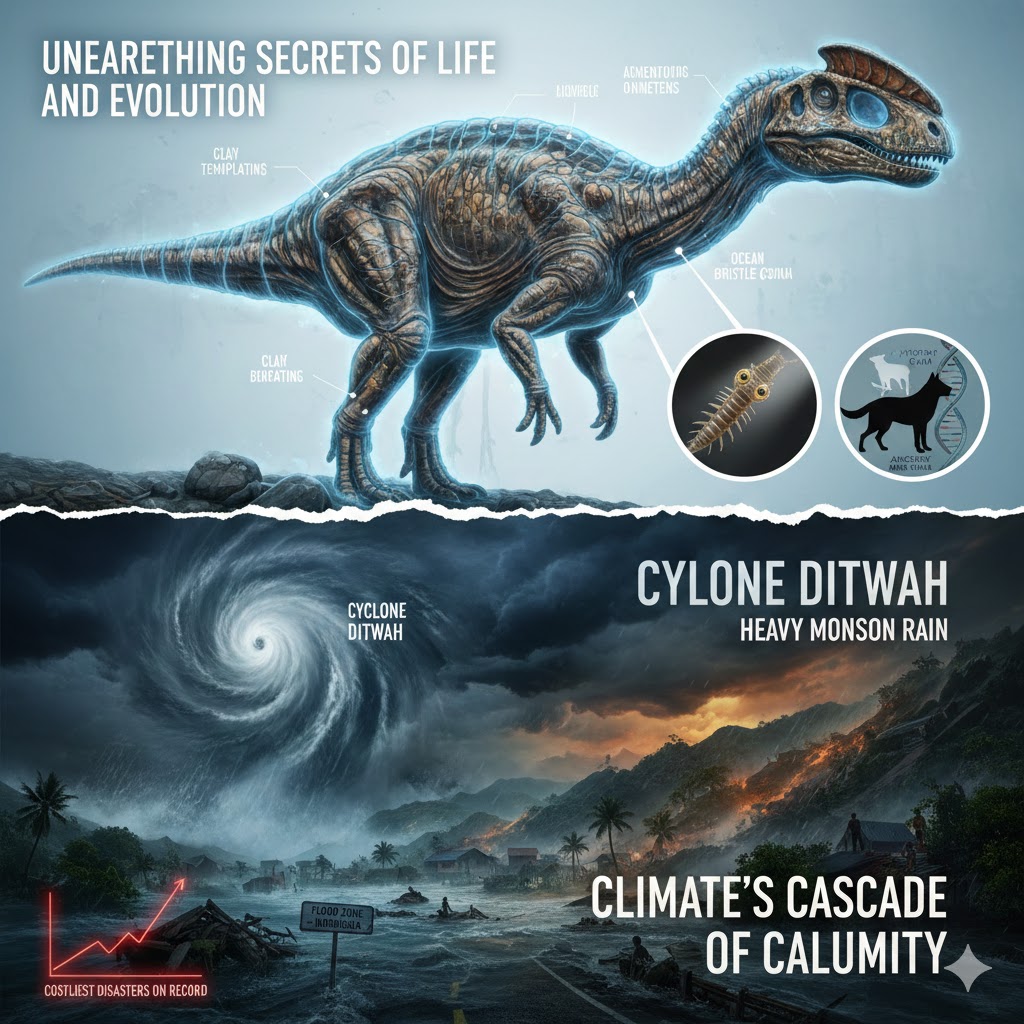
Unearthing Secrets of Life and Evolution
The field of paleontology has seen exciting updates, with the discovery of an extraordinary, mummified Edmontosaurus annectens. This dinosaur specimen, preserved through a unique "clay templating" process, has given scientists the most complete and lifelike profile of the species to date, revealing details like hooves and a hidden crest that re-shapes our understanding of its anatomy.
In the realm of modern biology, a tiny ocean bristleworm has offered a big clue about the evolution of vision. Scientists discovered that this adult worm’s eyes grow continuously, thanks to a rim of neural stem cells similar to those found in vertebrate eyes. This continuous growth, surprisingly regulated by environmental light, is forcing a re-evaluation of how complex eye structures have evolved across different species. Meanwhile, genetic research continues to trace the links between past and present, with studies confirming the persistence of ancient wolf DNA in most modern dog breeds, influencing traits like body size and behavior.
Climate's Cascade of Calamity
On the environmental front, the news is dominated by the increasing severity of climate-related disasters. The first half of the year has been recorded as one of the costliest on record for major disasters in the US, primarily driven by ferocious wildfires in the Los Angeles area and a destructive series of severe thunderstorms and tornadoes across the Central and Eastern states.
Globally, the consequences are stark, particularly in South and Southeast Asia. Heavy monsoon rains, compounded by powerful tropical cyclones like Cyclone Ditwah, have triggered catastrophic floods and landslides in countries like Indonesia and Sri Lanka, tragically killing over a thousand people and displacing millions. Climate scientists warn that a warmer atmosphere holds more moisture, making these weather systems significantly wetter and more destructive. The increasing frequency and intensity of these water-driven disasters underscore the urgent need for enhanced early warning systems and stronger, climate-resilient infrastructure worldwide.
Comments
0No comments yet. Be the first!