Featured post
The Holocaust

Dec 6, 2025 · 2 min read
Adolf Hitler's role as the orchestrator of the Holocaust—the systematic, state-sponsored persecution and murder of approximately six million Jews—is central to understanding the darkest chapter of the 20th century. The methods used by the Nazi regime to kill people evolved from spontaneous acts of terror to a highly organized, industrial-scale system of mass murder.
The victims of this violence included Jews, Roma (Gypsies), people with physical and mental disabilities, Soviet prisoners of war, Polish and Soviet civilians, political dissidents, and homosexuals. The following details the primary methods used by the Nazis and their collaborators to carry out this unprecedented genocide.
1. The Holocaust by Bullets: Mass Shootings
In the early phases of mass murder, particularly following the German invasion of the Soviet Union in June 1941, the Nazis primarily used mass shootings.
Einsatzgruppen (Mobile Killing Squads): These special units of the SS and police followed the German army (Wehrmacht) as they advanced into Soviet territory. Their mission was to eliminate all Jewish men, women, and children, as well as Communist officials and others deemed "undesirable."
The Execution Process: Victims were rounded up from towns and villages, marched to secluded sites (often ravines or forests), forced to dig their own mass graves, and then shot at the edge of the pits. This method was initially used extensively across Eastern Europe, resulting in the murder of over a million people.
Babi Yar: One of the most infamous mass shootings occurred in September 1941 at the Babi Yar ravine near Kyiv, where over 33,000 Jews were massacred in two days.
2. The Extermination Camps: Industrialized Murder
As the scale of the genocide grew, Nazi leaders realized that mass shootings were psychologically taxing for the perpetrators and insufficient for the vast numbers they intended to kill. At the Wannsee Conference in January 1942, the "Final Solution to the Jewish Question" was formalized, leading to the creation of dedicated extermination camps (or killing centers).
These camps were specifically designed for mass murder, as opposed to concentration camps, which were initially for detention and forced labor. The primary method of killing became gassing.
Methods of Gassing:
Carbon Monoxide (CO) Gas:
Gas Vans: Early experiments, adapted from the secret Aktion T4 program (which murdered people with disabilities), involved mobile gas vans. Victims were sealed in the cargo area, and the engine exhaust was piped back into the compartment, suffocating them. This was the primary method at Chełmno camp.
Stationary Gas Chambers: Camps built under Operation Reinhard (Bełżec, Sobibór, and Treblinka) used large, stationary gas chambers. They often piped lethal carbon monoxide gas from the exhaust of large internal combustion engines (like tank engines) into the sealed rooms.
Zyklon B (Hydrogen Cyanide Gas):
Auschwitz-Birkenau became the most notorious camp complex to utilize this method. Zyklon B was a commercial pesticide. Crystalline pellets were dropped through openings in the roof or side of the gas chambers. Upon exposure to air, the crystals released a fast-acting, lethal hydrogen cyanide gas.
The Nazis often disguised the gas chambers as shower rooms to prevent panic among the victims upon arrival.
3. Deliberate Deprivation and Brutality
Outside of the killing centers, millions were murdered through systematic neglect and cruelty in ghettos and concentration camps (labor camps).
Starvation and Disease: Jews confined in ghettos (like the Warsaw Ghetto) were subjected to deliberate food rationing that guaranteed starvation. Overcrowding, lack of sanitation, and disease (especially typhus) became deadly tools of murder.
Forced Labor ("Extermination Through Labor"): In concentration camps like Auschwitz I and Majdanek, prisoners were forced to perform brutal, back-breaking labor with minimal food and rest. Those who became too weak to work were often killed immediately. High mortality rates from exhaustion, malnutrition, and extreme abuse were a calculated part of the Nazi system.
Medical Experiments: In camps like Auschwitz, Nazi doctors conducted horrific, non-consensual medical experiments on prisoners, resulting in injury, mutilation, and death.
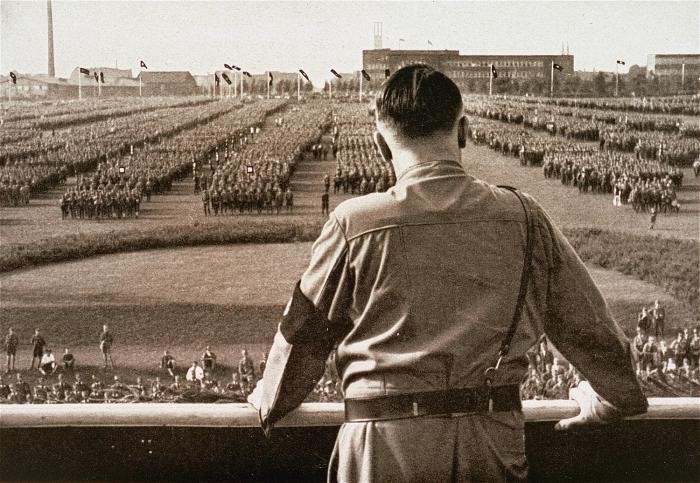
The Role of Hitler and the Nazi System
Adolf Hitler did not typically issue a single, written order for the genocide, but his role was fundamental:
Ideology: The entire program of murder was driven by Hitler's virulent, racist antisemitism, which was the core of Nazi ideology. His speeches and writings, particularly Mein Kampf, laid the foundation for the elimination of Jews.
Authorization: The "Final Solution" was the practical application of Hitler's will, implemented by key figures like Heinrich Himmler (head of the SS) and Reinhard Heydrich.
Radicalization: Historians argue that the radicalization of the violence was fueled by a structure where local officials competed to "work toward the Führer," constantly seeking more brutal and effective solutions for what they termed the "Jewish problem."
The Holocaust stands as a stark testament to the consequences of radical ideology combined with state-controlled, systematic organization of mass murder.
Comments
0No comments yet. Be the first!